

On a sunny evening on Rodeo Beach in the Marin Headlands, dogs gambol, couples canoodle, and Jan Roletto veers toward a dead cormorant she has spied amid the driftwood. With the ease of one who’s handled thousands of such birds, Roletto slips on gloves, measures the cormorant’s wingspan, snaps photographs, and records its condition.
What the cormorant’s wild and brilliant life meant to it, we do not know. But for the humans, the bird now begins a second existence: memorialized and distilled, as a data point in an ecological monitoring program called Beach Watch.
Roletto, the research coordinator for the Greater Farallones and Cordell Bank Marine Sanctuaries, began Beach Watch thirty years ago to bring more volunteers into coastal protection. “I expected it to last ten years and I’ve been blessed three times over,” she says. Beach Watch volunteers have now documented what birds died—and lived—along 30,000 cumulative miles of beaches. In the process, they have created a dataset that underpins our understanding of Bay Area shores, and informs how we use and manage them.

It is one of many such datasets produced by decades-old monitoring programs, largely funded by the federal government, that amount to our society’s collective eyes and ears on what is happening in the natural world. They help predict storms, adapt to rising seas, plan conservation, make park rules, and much more. “The entire system is dependent on these long-term datasets,” says Levi Lewis, who runs the Otolith Geochemistry and Fish Ecology Laboratory at the University of California, Davis.
But they have one serious flaw: “Long-term monitoring isn’t sexy,” says Emily Patrolia, the founder and CEO of ESP Advisors, a consultancy that advises ocean scientists on federal funding. Funding is always a challenge for programs like Beach Watch, a joint program between the marine sanctuaries and the Greater Farallones Association, that rarely offer flashy, quick wins—and whose value becomes realized over decades, not electoral cycles. Now a presidential administration hostile to the very notion of climate change is gutting science agencies, taking down data portals, and has left monitoring programs like Beach Watch stranded and scrambling for funding. Some are at risk of being terminated outright.
For now, an emergency fundraising campaign by the Greater Farallones Association has given Beach Watch a life raft till September. Other programs are still waiting for money. What stands to be lost if science’s eyes and ears are shuttered?
From undersea robots to weekend hikers, these eyes and ears take many forms. Each illuminates a different slice of the natural world, and helps us protect it—and our communities. “If you don’t have [long-term monitoring programs], it’s like driving down the road at night with no headlights,” says Patrolia.
Some programs send people to specific places at specific times to document what they see, like Beach Watch, or the Multi-Agency Rocky Intertidal Network (MARINe), whose researchers have walked shores up and down the West Coast for nearly 30 years. Some, like the ACCESS cruises, have deployed trained observers out to sea for 21 years to scan the horizons and the depths of our local marine sanctuaries. For one Bay-Delta program, ears are extremely literal—Lewis is on a team that has analyzed chemicals in fish ear bones for the past seven years to document how endangered species are faring. (Fish ear bones are full of intel.)
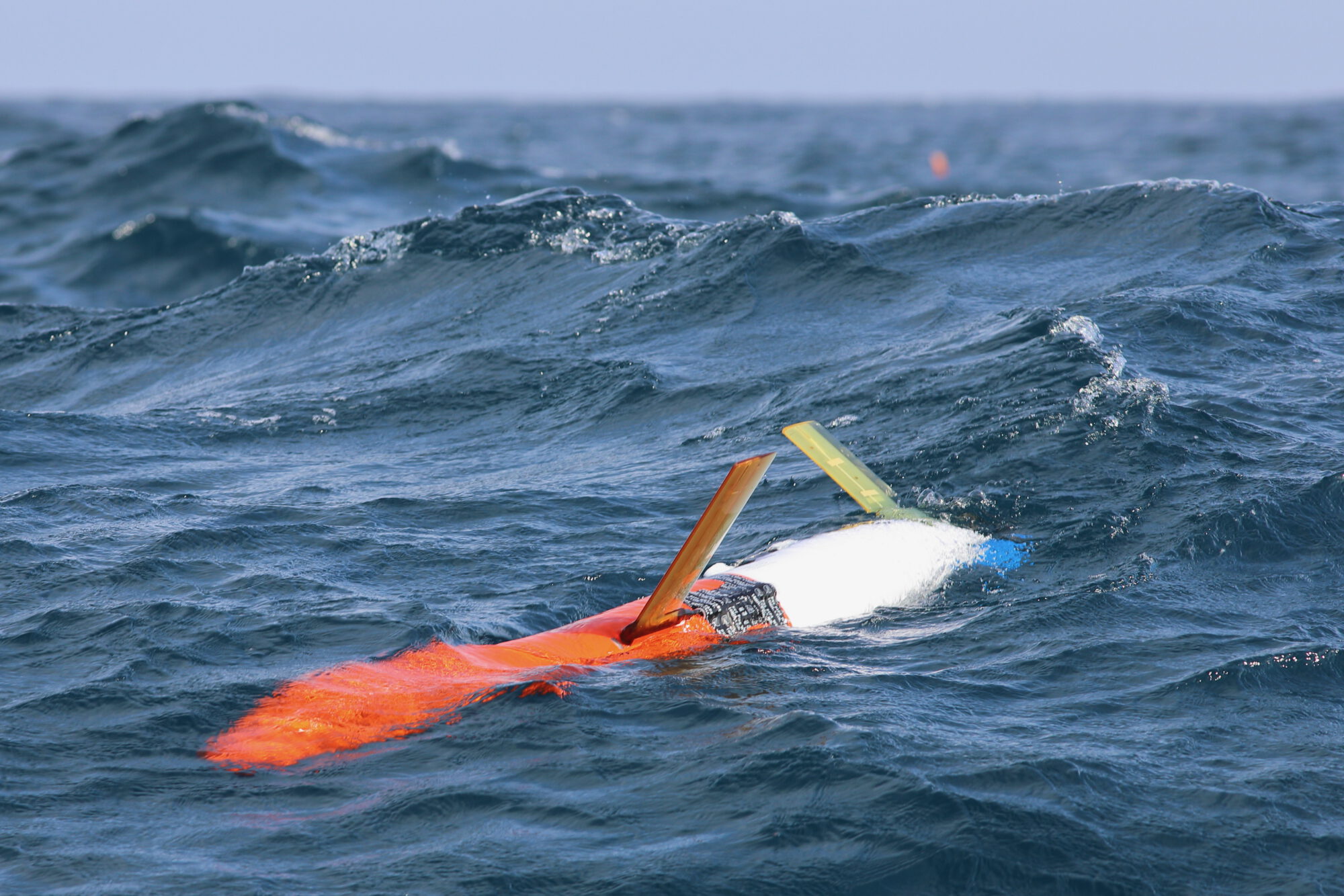
Some have dispensed with human data-collectors: the 21-year-old Central and Northern California Ocean Observing System (CeNCOOS) send out autonomous gliders—neon orange sensor-loaded torpedoes that race through deep waters gathering data; the 15-year-old Marine Biodiversity Observation Network extracts DNA from water samples to see what genetic data animals are leaving behind.
Together, these datasets help us understand our changing planet. “You never know when you’re going to need that information,” Roletto says. “You can’t go back and get it.”
!function(){“use strict”;window.addEventListener(“message”,function(a){if(void 0!==a.data[“datawrapper-height”]){var e=document.querySelectorAll(“iframe”);for(var t in a.data[“datawrapper-height”])for(var r,i=0;r=e[i];i++)if(r.contentWindow===a.source){var d=a.data[“datawrapper-height”][t]+”px”;r.style.height=d}}})}();
Consider: the thousands of dead birds Roletto has gathered helps scientists set a baseline for how many shorebirds die normally—and see when something unusual, like an oil spill or heatwave, happens. After one oil spill, “I was able to go into unified command and say, ‘Look here, I have 10 years worth of data that shows no, there’s no oil on the beach—and you need to clean it to the way it was before,’ ” says Maria Brown, the former superintendent of the Greater Farallones and Cordell Bank National Marine Sanctuaries. Beach Watch’s data has helped state and federal agencies get tens of millions of dollars in damages from polluters.
These datasets also help scientists and managers foresee the future. The colorful gliders help predict when and where storms will hit the state. Phytoplankton counts give us early notice of harmful algal blooms that can close fisheries and endanger wildlife, people, and pets. Observations of rare animals on our coasts inform which parts of the ocean need protection. Lewis’s information helps improve species recovery programs.

But the datasets must survive long enough to be useful. Most monitoring programs don’t. “In academia, there is this resistance against what they call monitoring for monitoring’s sake,” says Niko Kaplanis, a postdoctoral scholar at UC Santa Cruz who surveyed long-term monitoring program practitioners in a 2023 paper.
Federal funding has helped many programs survive beyond grant cycles demanding quick answers. “[Federal] funding, oftentimes, historically, was some of the most robust and reliable funding for some of these types of long-term research questions,” says Jaime Jahncke, who has run the ACCESS cruises since they started and helps run monitoring programs at the Farallon Islands. The Farallon monitoring program lost key federal funding before Trump’s election. MARINe, the rocky intertidal monitoring network, intentionally seeks diverse funding from a range of federal and state partners to avoid getting too reliant on any one potentially fickle private organization. “It’s very rare to see a philanthropic organization be a supporter of a 30-year time series,” says Francisco Chavez, a senior scientist with the Monterey Bay Aquarium Research Institute, who helped start the Marine Biodiversity Observation Network fifteen years ago. Once a program makes it long enough, it reaches a tipping point Kaplanis describes as “program inertia.” “You can address all sorts of questions that would be impossible to address [otherwise],” he says.
Many of these questions—and answers—surprise even the scientists who started the data collection. This mostly-public, taxpayer-funded data helps scientists, beachcombers, and anglers alike navigate the natural world in countless ways. “That’s sort of the beauty of the program,” says Alex Harper, the deputy director of CeNCOOS, which collects and publishes data on a 2000-mile swath of the California coast.
For its dramatic scales, much of this data collection has “operated in the background of everyday lives,” says Harper. Some scientists Bay Nature reached out to want to keep it that way, to avoid attracting attention from a climate change-hostile administration. Others are now embracing the spotlight: Harper and CeNCOOS colleagues are doubling down on explaining to the public why funding this ocean observing matters. “It’s work we’ve known we needed to do for a long time,” says Harper.

Trump’s first six months back in office have already hobbled long-term programs in waves of budget cuts, layoffs, and program shutdowns.
Trump-initiated contract reviews have delayed program funding by months, says Patrolia. Those delays alone upend operations. “Folks read the news and make decisions around their operations and capacity as well,” says Harper. This year, CeNCOOS funding approval took two more months than usual to arrive: in that time, Harper saw cancelled surveys, delayed instrument deployments, and experienced staff considering leaving for industries where funding is more reliable. “To have all of that start and stop breaks down [community] trusts that can have years, if not decades, of impacts,” says Patrolia.
.cta-box-responsive{
overflow:hidden;
padding:6.25%;
position:relative;
height:auto;
margin-left:10%;
margin-right:10%;
margin-bottom:4%;
background-color: #000000;
color:white;
border-style: solid;
border-color:black;
text-align: center;
}
.cta-link-color {
color: #faa61a;
}
.cta-box-image {
display: block;
padding-top:10px;
margin-left: auto;
margin-right: auto;
width: 75px;
}
Sign up today!

Even for programs with funding that’s still steady, the gutting of federal agencies through layoffs, reduction-in-force notices, and early retirements is an existential threat. Both the superintendents of the Bay Area’s National Marine Sanctuaries have taken early retirements, as has the West Coast regional director of National Marine Sanctuaries. Programs need internal advocates to keep going. “I have one other federal staff member that’s still in place at our headquarters office, that, when you boil it down to it, cares about this long-term monitoring program,” says a NOAA employee who runs a West Coast-wide monitoring effort and asked to remain anonymous for fear of retaliation. Even if funding remains, “if we don’t have anyone in these offices in the government that cares to carry it on, then we’re kind of dead in the water,” the employee says.
In some cases, promised equipment upgrades have yet to arrive. Websites that provided data to the public have gone dark. A nearly decade-long research and monitoring program that seemed on track for renewal before Trump’s election has now been canned. “The conversations kept slipping,” says a source who works on that program, and asked to remain anonymous to preserve funding relationships. It’s not always possible to untangle what’s a Trump-influenced budget cut and what’s not, says the source.
Many of these efforts have thrived on historically bipartisan support. Now, most of the managers Bay Nature talked to say their programs are in survival mode. President Trump has proposed cutting NOAA’s budget by almost one-third, with a focus on eliminating climate data programs, slashing the budget of San Francisco’s Environmental Protection Agency office by 75 percent, and eliminating the USGS’s biological research arm. MARINe’s diverse funding portfolio approach is unique, says Kaplanis; most of the programs he’s surveyed rely mostly on one or two funding sources. When Beach Watch’s emergency fundraising runs out this September, if the Greater Farallones Association’s agreement with NOAA hasn’t been renewed and it can’t raise enough from private donors, “we’ll have to make some tough decisions,” says Monika Krach, the association’s executive director.


The biggest revelations from the ocean often come from keeping tabs on the smallest animals. Above, Jaime Jahncke examines krill collected on an ACCESS cruise.
For now, volunteers will keep going out on beaches and keep counting dead birds. For now, the instruments are bobbing in the water, the boats are leaving monthly to pull up phytoplankton from the depths, and the lab technicians keep processing DNA samples. The treasure chests of databases keep growing slowly—but no longer so surely.
“There are two things you should never do with a time series: start one, or end one,” says Francisco Chavez.

You must be logged in to post a comment.